Pipeline built. Revenue won.
Engagements across industrial B2B — EPC, precision manufacturing, automation, export, trading, and more. Client identities are anonymised. All metrics are drawn from documented engagement data.

EPC & Environmental Services
ETP/STP Turnkey Projects · IndiaB2B Lead Generation · Appointment Setting · Pipeline Management
A turnkey EPC company with strong technical capabilities and high client satisfaction — but business development entirely dependent on irregular referrals. Sales team bandwidth consumed by project execution, leaving insufficient capacity for systematic prospecting.
100% referral-dependent. Zero outbound. No pipeline visibility.
- Every new engagement came through referrals — zero systematic prospecting or proactive market development.
- No outbound outreach or structured pipeline development activity.
- Inconsistent prospect engagement and follow-up across long industrial sales cycles.
- No view of opportunity stages, next actions, or revenue forecasting.
- Sales team capacity stretched by project execution, limiting business development bandwidth.
- Build outreach capability beyond the referral network.
- Create a disciplined follow-up cadence appropriate for long industrial sales cycles.
- Provide professional sales execution without requiring major additional internal resources.
- Multi-touch calling and personalised email outreach to decision-makers at manufacturing facilities, industrial parks, and municipal authorities.
- Structured CRM implementation capturing interactions, opportunity stages, technical requirements, and project timelines.
- Weekly dashboards covering outreach volume, pipeline movement, and conversion-funnel analysis.
- Defined KPIs for outreach volume, response rates, and meeting conversions with a regular review cadence.
The business moved from waiting for referrals toward actively shaping its sales pipeline. Leadership gained visibility into opportunity value, stage progression, and next actions — enabling better resource allocation and more confident forecasting. The sales function evolved from a reactive, bandwidth-constrained operation toward a process-driven growth role.
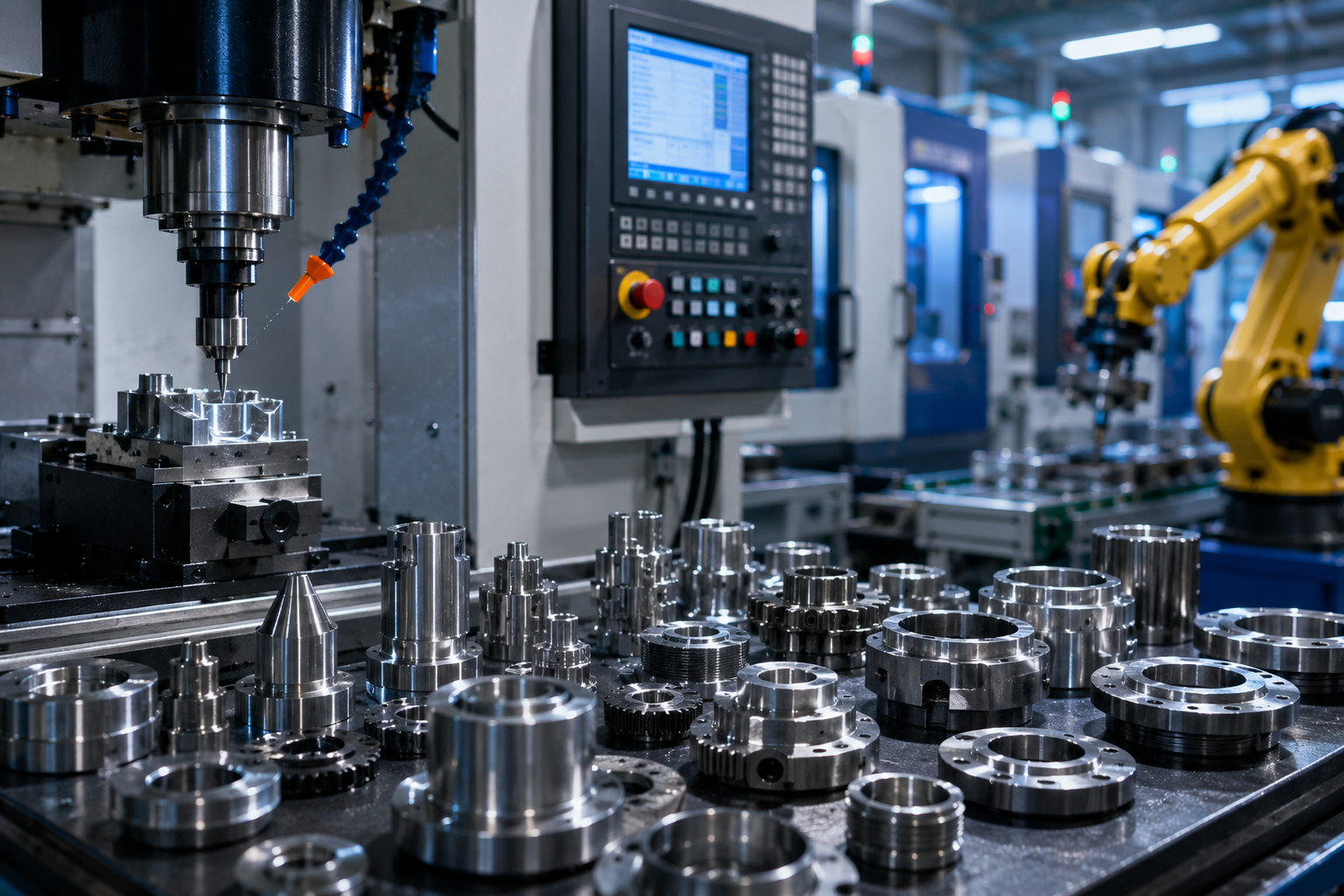
Precision Component Manufacturing
OEM Supply · India · MNC StandardsB2B Lead Generation · ABM · Appointment Setting · Pipeline Management
An India-based mid-sized precision manufacturing organisation. 10+ years in business. Manufactures precision-machined small components for Tier-1 suppliers and OEMs under stringent global MNC quality and compliance standards. Approval-based model — supplier approval creates consistent repeat orders. Sales cycles typically 6–18 months. Growth before engagement was largely relationship-driven.
Stable revenue, limited OEM reach, person-dependent selling.
- Stable but slow-growing revenue base with limited new account acquisition.
- New OEM acquisition came primarily through referrals — no proactive outbound system.
- Irregular outbound activity without systematic execution discipline.
- Limited access to purchasing and engineering decision-makers at target OEMs.
- No structured follow-up tracking and limited pipeline visibility.
- Premium pricing required stronger value justification and consistent engagement to compete effectively.
- Expand OEM account reach beyond existing relationships.
- Improve decision-maker access across purchasing and engineering functions.
- Build a long-cycle tracking system suited to 6–18 month sales processes.
- Pan-India OEM outreach targeting accounts based on fit and potential.
- Account-based targeting of OEM and Tier-1 supplier accounts.
- Decision-maker mapping across purchasing and engineering functions at each target account.
- Coordinated calling and email outreach with disciplined multi-touch cadences.
- Long-cycle tracking system designed for 6–18 month sales processes.
- CRM integration for opportunity progression and pipeline health monitoring.
- Weekly execution reviews and market feedback loops.
The company expanded OEM reach, improved access to decision-makers, increased qualified OEM discussions, and achieved 2×–3× revenue growth. Sales outcomes shifted from person-dependent toward system-driven execution — creating a multi-year growth foundation. Referral-led acquisition reduced as a share of total new business by 20–25 percentage points over the engagement period.

Industrial Automation
Enterprise ABM · Premium Segment · Indian MNC SubsidiaryAccount-Based Marketing (ABM) · B2B Lead Generation · Inside Sales
Indian subsidiary of a leading global automation company operating in the premium enterprise technology segment. Success depended on reaching the right decision-makers — not maximising contact volume. Brand required precise, premium-aligned messaging; generic outreach was incompatible with enterprise positioning.
Premium brand. Wrong contacts. Volume outreach was damaging, not helpful.
- Target segment penetration below 5% before engagement — the right accounts were not being reached.
- Only 15% of leads reached were actual decision-makers; the majority were gatekeepers or wrong contacts.
- C-suite and VP-level engagement below 20% — insufficient for enterprise-level sales conversations.
- Generic outreach was misaligned with premium brand standards — risking brand perception at target accounts.
- Insufficient access to senior procurement, engineering, and executive decision-makers in enterprise accounts.
- Access C-suite, VP-level, and senior procurement decision-makers in named enterprise accounts.
- Apply ABM methodology — account-fit, intent-based targeting, and decision-unit mapping.
- Protect brand alignment through premium, precise, account-specific messaging.
- Qualify rigorously so only sales-ready opportunities reached the sales team.
- Account-Based Marketing strategy based on account fit, intent signals, and opportunity size.
- Stakeholder-level targeting with decision-making-unit mapping within each named account.
- Brand-aligned, account-specific messaging and creative designed for premium enterprise positioning.
- Rigorous lead qualification — only sales-ready opportunities with verified buying authority progressed to the sales team.
The client moved from volume-based outreach — which was misaligned with brand standards and reaching the wrong contacts — to a precision ABM model with verified decision-maker access, premium messaging, and rigorous qualification. The sales team's time shifted from filtering poor-fit enquiries to advancing qualified enterprise opportunities.

Industrial Belt Manufacturing & Export
International Market Expansion · 3-Year EngagementMarket Research · Outbound Sales · International Expansion
An established Indian industrial belt manufacturer with 20+ years of manufacturing experience. Products include V belts, cogged/narrow/wrapped variants, Poly V belts, Hexagonal V belts, Harvester and Lawn Mower belts, and Kevlar Cord belts. Export presence across the United States, Russia, Egypt, and other markets. Strong domestic position, but international expansion was fragmented and founder-dependent before the MOTM engagement.
Export growth limited by founder bandwidth and manual importer research.
- International market expansion was fragmented and heavily reliant on founder bandwidth.
- Inconsistent engagement with potential international buyers across target markets.
- Manual, time-intensive importer identification with no systematic research methodology.
- Limited access to key decision-makers — C-level executives and procurement leaders at target importers.
- No systematic lead-nurturing or follow-up process for international prospects.
- Low transparency into export opportunities and pipeline status.
- Build a structured importer identification and qualification process across international geographies.
- Access C-level and procurement decision-makers at target importers systematically.
- Operate as an embedded extension of the client's export sales capability.
- Systematic research to identify and qualify importers in target geographies — 300+ companies mapped.
- Shortlisting and profiling of 120+ qualified importers based on fit and potential.
- Decision-maker access targeting C-level executives and senior procurement leaders.
- Stakeholder mapping — 80+ decision-makers identified and engaged across target accounts.
- Multi-touch engagement adapted for time zones and cultural contexts — 4–6 touchpoints per account.
- Operated as an embedded extension of the client's internal export sales capability throughout.
The client built a structured international pipeline from a standing start — moving from fragmented, founder-dependent export development to a systematic importer identification and engagement program with active opportunities at multiple pipeline stages.

Steel & Alloy Trading
MSME Sales Transformation · 30+ Year BusinessSales Outsourcing · Inside Sales · Pipeline Management
A mid-sized Indian steel and alloy trading company in the MSME segment. Volume-driven, price-sensitive model. 30+ years in business — a highly competitive, thin-margin environment where customer acquisition was unpredictable and reactive. Changing procurement teams at customer accounts made relationship continuity difficult.
Owner-dependent. Reactive selling. Revenue impossible to forecast.
- Average conversion rate of 15% before engagement — opportunities were lost not through poor product fit but through absent follow-up discipline.
- Sales target attainment at 60% — consistent underperformance against plan.
- Repeat business below 20% — existing customer base undermonetised.
- Owner personally managing 4+ hours of sales activity daily, creating a ceiling on scale.
- Zero sales automation — all tracking manual, all follow-up person-dependent.
- Revenue forecasting was nearly impossible without pipeline structure.
- Build a structured outbound acquisition system targeting manufacturing and fabrication buyers.
- Increase repeat orders through disciplined account management.
- Reduce owner involvement in routine sales — target reduction of 70%.
- Replace ad-hoc sales effort with a system — target 85% reduction in unstructured activity.
- Daily calling and structured follow-ups — 95% prospect follow-up completion achieved.
- Multi-channel outreach across phone, email, field visits, and messaging.
- Average 7+ touchpoints per prospect — sustained engagement through the full decision cycle.
- Daily customer tracking and pipeline reporting with full opportunity-stage visibility.
- Full MOTM execution ownership, reducing client sales-team involvement by 80%.
The business moved from owner-dependent, unpredictable selling toward a process-driven acquisition system. The result was a broader customer base, more repeat business, stronger revenue performance, and significantly lower day-to-day owner involvement. Revenue became more predictable and the owner's time was freed for higher-value priorities.
What every case has in common.
Referral Dependency Broken
EPC began at 100% referral dependency. Precision manufacturing was referral-led. Export expansion was founder-dependent. In every case, MOTSB2B built a proactive acquisition system to replace relationship-driven growth.
Decision-Maker Access
C-suite, VP, procurement, purchase, engineering, plant-head, and importer stakeholders systematically targeted across all five cases — not gatekeepers or junior contacts.
Follow-Up Discipline
EPC: 92% follow-up rate. Steel: 95% follow-up completion. Export: 4–6 touches per account. OEM: long-cycle systems for 6–18 month sales processes. Steel: 7+ touchpoints per prospect.
Pipeline Visibility
EPC: 100% pipeline visibility. Precision: 2×–3× improvement. Export: active international pipeline established. Steel: +40% predictability improvement.
Owner & Founder Dependency Reduced
Steel: −75% owner time. Precision: ~70% process-led execution. Export: embedded sales-team model replacing founder dependency. Each engagement reduced person-dependency as a core outcome.
Multi-Channel Execution
Calling, email, LinkedIn, WhatsApp, field visits, CRM, and account-based engagement appear across all five cases — matched to the channel preferences and buying contexts of each sector.
Precision Over Volume
Especially clear in premium automation and precision manufacturing — account fit, stakeholder relevance, qualification, and brand alignment were prioritised. Raw lead counts were not the objective.
Industrial Specialisation
Cases span EPC, environmental services, precision manufacturing, OEM components, industrial automation, industrial belt manufacturing, export markets, and steel and alloy trading.
A similar challenge?
Tell us about your pipeline situation. We will be direct about whether our approach fits your business.